
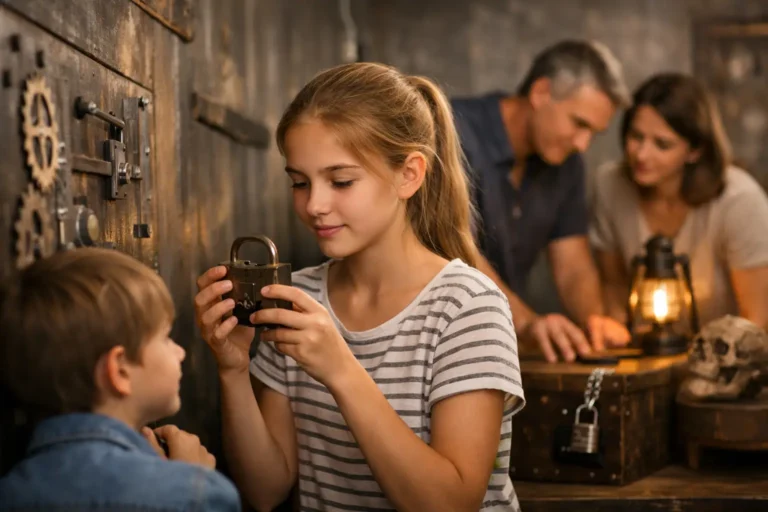
A 7-year-old who loves riddles and a 14-year-old who races through logic games are not walking into an escape room with the same needs. That is why the answer to what age can play escape rooms is not one fixed number. It depends on the room, the theme, the difficulty, and how much adult support is part of the experience.
For families planning a birthday, vacation activity, or weekend outing, that flexibility is good news. Escape rooms can work for kids, tweens, teens, and adults when the game is designed well and the group picks the right challenge. The goal is not just getting everyone into the room. It is making sure everyone actually has fun once the clock starts.
What age can play escape rooms in real life?
Most escape rooms do not have one universal age rule. Some venues welcome younger players with an adult in the room, while others set a minimum age based on puzzle complexity, safety rules, or the tone of the story. In practice, many kids around ages 8 to 10 can enjoy an escape room if it is family-friendly and they are playing with parents or older siblings.
That does not mean every child in that age range is ready. Some younger players love searching for clues, spotting patterns, and helping the team talk through ideas. Others may get restless if the game leans heavily on reading, abstract logic, or patience. Age matters, but attention span and comfort level matter too.
Teens usually have the easiest time jumping in. They tend to enjoy the mix of competition, teamwork, and hands-on problem-solving. For many families and friend groups, middle school and high school ages are the sweet spot because players are old enough to contribute independently but still excited by the immersive, game-like format.
Adults often assume escape rooms are either too hard for kids or only built for children if they are family-friendly. Neither is quite true. A well-designed room can give younger players exciting tasks while still giving adults enough challenge to stay engaged.
The biggest factors are room design and supervision
When parents ask what age can play escape rooms, they are usually really asking a better question: will my child enjoy it and feel included? That answer comes down to how the room is built.
A family-friendly room usually has a clear story, intuitive clues, and enough variety that different ages can help in different ways. One player may solve word puzzles, another may search for hidden objects, and another may make the key connection that moves the team forward. That kind of design keeps the experience collaborative instead of frustrating.
Adult supervision also changes everything for younger players. A child who might struggle alone can thrive with a parent helping organize clues, read instructions, or keep the team calm when time gets tight. Private bookings make this even better because families can play at their own pace without worrying about strangers taking over the game.
Theme matters too. A whimsical adventure or treasure hunt-style room feels very different from a dark, intense, or horror-themed game. Even if the puzzle level is manageable, the atmosphere may not be the right fit for younger guests. Families should always look at both difficulty and theme before booking.
Best age ranges for different escape room experiences
There is no universal chart that fits every business, but a practical age breakdown helps set expectations.
Children under 7 can sometimes join, but they are usually there to participate in small ways rather than solve the full game. They may enjoy finding objects, entering numbers, or celebrating each solved step with the group. For this age, the experience works best when adults expect a shared family activity, not a child-led challenge.
Ages 8 to 10 are often the first range where many kids can actively contribute to the puzzle-solving. They may not crack every clue on their own, but they can notice details, make associations, and stay engaged for the full game if the theme is inviting and the room is approachable.
Ages 11 to 13 are often a strong fit for beginner-friendly escape rooms. Kids in this range usually enjoy the independence of being part of the solution, and they can often handle more layered clues with just a little guidance. This is a popular age for birthday parties and family outings because the challenge feels exciting without becoming too overwhelming.
Teens 14 and up are typically comfortable in a much wider range of room styles and difficulties. They often enjoy faster-paced gameplay, more complex logic, and the competitive thrill of beating the clock. For teen groups, the best experience depends less on whether they can play and more on whether the room matches their confidence level.
What age can play escape rooms without adults?
This is where venue policies matter most. Some businesses allow teens to play on their own after a certain age, while others require at least one adult participant in the room or a guardian on site. These rules may reflect not just safety, but also the fact that escape rooms are live attractions with physical spaces, timed games, and staff interaction.
Even when a venue allows younger teens to play without adults, that does not always mean it is the best choice for every group. A room full of excited middle schoolers might have a blast, or they might burn ten minutes arguing over one clue. Sometimes an adult presence helps keep the team organized without taking away the fun.
For parents planning a party, it helps to think about supervision as part of the experience design. If the group is young, an adult in the room can make the game smoother and more enjoyable. If the players are older teens, they may prefer the independence of solving everything themselves.
How to tell if an escape room is right for your child
The easiest way to choose well is to focus on three things: reading level, patience, and interest. If your child likes scavenger hunts, board games, mysteries, or puzzle apps, that is usually a promising sign. Escape rooms reward curiosity and teamwork more than raw academic skill.
Reading level matters because many clues rely on written instructions, story details, or coded hints. A younger child may still enjoy the game, but they may need teammates to read information aloud. That is not a problem unless the room depends so heavily on text that they cannot participate meaningfully.
Patience is another big factor. Some kids love hunting for hidden details and trying different ideas. Others want quick answers and may get frustrated when a lock does not open right away. A one-hour game can feel thrilling for one child and long for another.
Interest in the theme often makes the difference between a good experience and a great one. If a child is excited by magic, adventure, mysteries, or fantasy worlds, they are much more likely to stay invested. The setting pulls them in and makes the problem-solving feel like part of the story instead of a school exercise.
Why family-friendly escape rooms work so well
The best family escape rooms give everyone a role. Younger players get the thrill of discovery. Older kids and teens get to think critically and take initiative. Adults get a genuinely engaging challenge instead of standing on the sidelines.
That shared involvement is what makes escape rooms such a strong fit for birthdays, vacations, and family time. Everyone is participating at once. No one is just watching. The room creates natural moments of teamwork, laughter, and small victories that feel memorable because the group earned them together.
Private experiences make this even more comfortable for mixed-age groups. Families can communicate in their own style, move at their own energy level, and let every player contribute without pressure from outside participants. For many first-time players, that privacy turns an unfamiliar activity into an easy yes.
In Central Florida, families often want one activity that can entertain siblings, parents, cousins, and visiting relatives without splitting into separate plans. That is one reason a private, immersive venue like Edge Escape Room appeals to so many groups. It feels special, interactive, and accessible at the same time.
A smart way to book the right room
If you are choosing for a family or youth group, start with the room description rather than the hardest challenge available. Look for a theme that sounds fun, a difficulty level that fits first-time players, and a setting that feels inviting instead of intense. If the group has a wide age range, balance matters more than bragging rights.
It also helps to ask one simple question before booking: will each person have a way to participate? That mindset usually leads to better picks than focusing only on minimum age. The right room gives younger players moments to shine, gives older players enough challenge to stay excited, and gives the whole group a reason to talk about the experience long after the timer stops.
If you are wondering what age can play escape rooms, the most honest answer is this: younger kids can often join, older kids and teens usually thrive, and the best experience comes from matching the room to the group. Pick a family-friendly adventure, bring a team ready to work together, and the age question becomes a lot less stressful – because the fun takes over from there.